In the world of business and distribution, an efficient supply chain does not only depend on delivering products to customers. Before goods reach their final destination, several important processes must take place. One of the most essential is Inbound Logistics.
Inbound logistics plays a significant role in supply chain management because it involves the movement, handling, and storage of goods from suppliers to a company's warehouse or production facility.
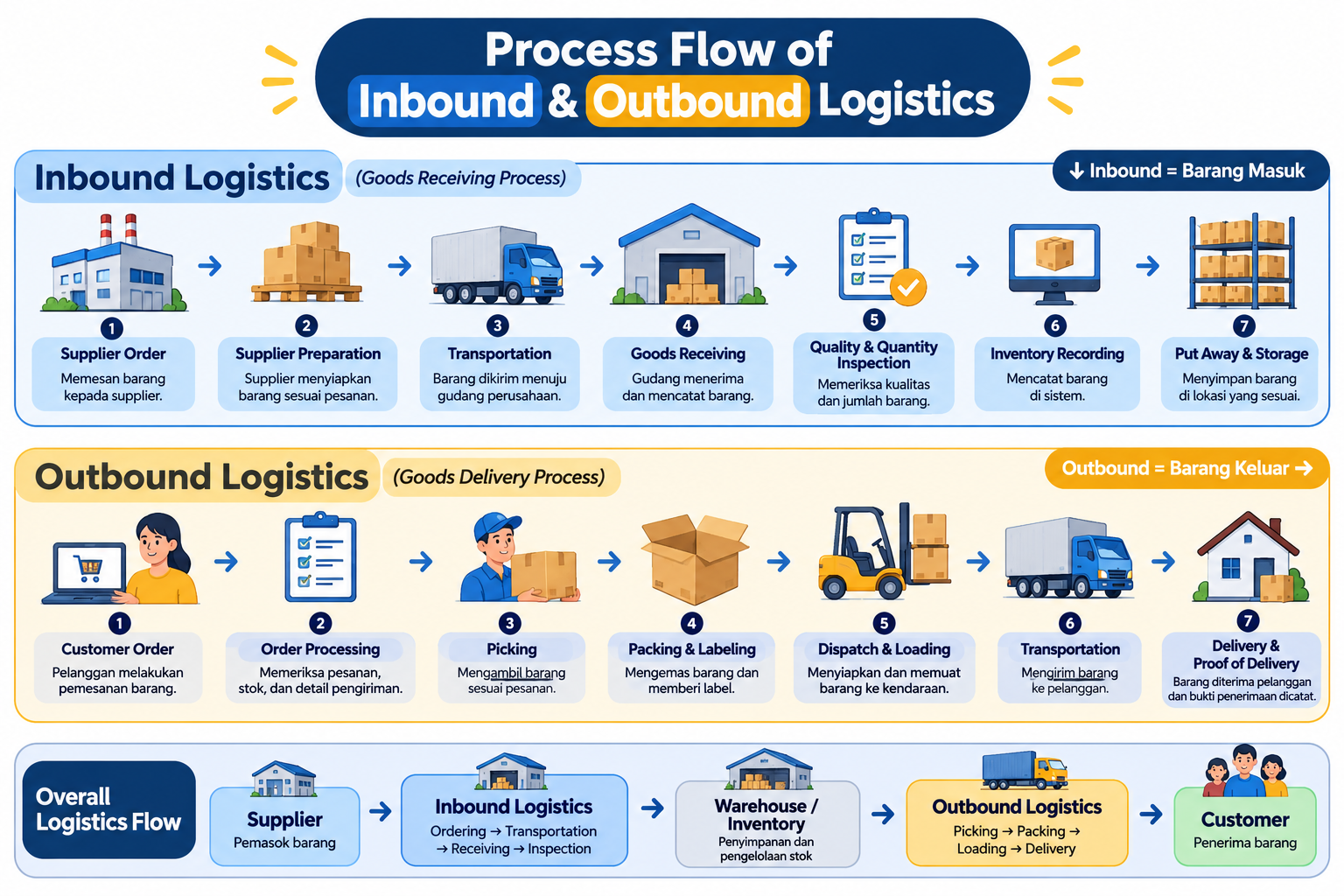
But what exactly is inbound logistics? How does the process work, and why is it important for business operations? Let's explore further.
1. What Is Inbound Logistics?
Inbound logistics refers to the process of managing the flow of goods, raw materials, and products from suppliers to a company, warehouse, or manufacturing facility.
This process includes several activities, such as procurement, transportation, receiving, quality inspection, inventory recording, and warehouse storage.
The main objective of inbound logistics is to ensure that the materials and products required by a business are available in the right quantity, quality, and time.
Example:
A distribution company orders 500 units of a product from a supplier. Once the order is confirmed, the supplier prepares and ships the goods to the distributor's warehouse.
When the shipment arrives, the warehouse team checks the quantity and condition of the products before recording them in the inventory system.
The entire process is part of inbound logistics.
2. The Inbound Logistics Process in Supply Chain Management
Inbound logistics consists of several interconnected stages. Each stage must be properly managed to prevent delays, errors, and operational disruptions.
Here are the main stages of inbound logistics:
1. Procurement
The company identifies its product or material requirements, searches for suitable suppliers, places purchase orders, and agrees on product specifications and quantities.
2. Transportation
The supplier prepares and transports the goods to the company's warehouse or facility using suitable transportation methods, such as trucks, ships, or aircraft.
3. Receiving
Upon arrival, the goods are received by the warehouse team. Staff check the shipping documents, delivery details, and quantities against the purchase order.
4. Inspection
The received goods undergo quality and quantity inspections to ensure that their physical condition, specifications, and quantities meet the agreed requirements.
5. Put-away
Once approved, the goods are moved to their designated storage locations to ensure proper organization and easy accessibility.
6. Inventory Recording
The received goods are recorded and updated in the inventory management system, allowing the company to monitor stock levels accurately.
3. Functions and Benefits of Inbound Logistics
Inbound logistics is more than just receiving goods from suppliers. Proper management can significantly improve a company's operational efficiency.
Some of its key benefits include:
- Maintaining Stock Availability: Ensures that raw materials and products are available according to operational requirements.
- Reducing Receiving Errors: Minimizes the risk of incorrect quantities, damaged goods, or products that do not match specifications.
- Optimizing Operational Costs: Helps control procurement, transportation, and storage expenses.
- Improving Warehouse Efficiency: Supports better storage organization and inventory management.
- Strengthening Supplier Relationships: Creates a more structured and measurable working relationship with suppliers.
4. The Difference Between Inbound and Outbound Logistics
Inbound and outbound logistics are two essential processes in supply chain management. Although they are closely connected, they serve different purposes and involve different directions of goods movement.
| Aspect | Inbound Logistics | Outbound Logistics |
|---|---|---|
| Direction | Supplier to company | Company to customer |
| Main Focus | Receiving goods | Distributing goods |
| Activities | Procurement, receiving, inspection, storage | Order processing, picking, packing, shipping |
| Main Objective | Ensuring stock availability | Ensuring timely product delivery |
| Example | Receiving products from suppliers | Delivering products to customers |
Simply put, inbound logistics focuses on how goods enter a company, while outbound logistics focuses on how goods leave the company and reach their customers.
5. Common Challenges in Inbound Logistics
Although inbound logistics may seem straightforward, companies often face several challenges that can affect overall supply chain performance.
Some common challenges include:
- Supplier Delays: Late deliveries from suppliers can disrupt production schedules and daily operations.
- Receiving Errors: Differences in product quantities or specifications can create inventory discrepancies.
- Poor Inventory Management: Inaccurate stock records can lead to overstocking or stock shortages.
- Limited Warehouse Capacity: Insufficient storage space can slow down receiving and put-away activities.
- High Transportation Costs: Poorly planned shipments can increase overall operational expenses.
6. How to Improve Inbound Logistics Efficiency
To overcome these challenges, companies need to implement effective strategies and establish a well-organized inbound logistics system.
Here are several ways to improve efficiency:
- Evaluate Suppliers Regularly: Select suppliers based on product quality, delivery punctuality, and service consistency.
- Implement Digital Inventory Systems: Use technology to monitor and update inventory data in real time.
- Apply Quality Control Procedures: Inspect goods before they enter the storage area to prevent defective products from being recorded as available stock.
- Optimize Delivery Schedules: Coordinate shipment arrivals to prevent congestion and excessive waiting times in receiving areas.
- Monitor Logistics Performance: Regularly evaluate receiving times, inventory accuracy, and transportation costs.
7. Key Performance Indicators (KPIs) for Inbound Logistics
To ensure inbound logistics operates effectively, companies need measurable performance indicators, commonly known as Key Performance Indicators (KPIs).
Some important KPIs include:
| KPI | Measurement Purpose |
|---|---|
| Receiving Lead Time | Measures the time required to complete the receiving process after goods arrive |
| Supplier On-Time Delivery | Measures the percentage of supplier deliveries arriving on schedule |
| Receiving Accuracy | Measures the accuracy of received quantities and product specifications |
| Damage Rate | Measures the percentage of goods damaged during transportation or receiving |
| Put-away Time | Measures the time required to move goods into designated storage locations |
| Inbound Logistics Cost | Measures the total expenses associated with inbound logistics activities |
By monitoring these indicators, companies can identify operational weaknesses and determine which areas require improvement.
Conclusion
Inbound logistics is a fundamental part of an effective supply chain. It ensures that every product or material required by a company is properly received, inspected, recorded, and stored before being used in production or distributed to customers.
Effective inbound logistics management helps businesses maintain stock availability, reduce operational errors, control costs, and improve overall productivity.
Remember, a successful supply chain starts long before goods reach the customer. It starts with an efficient inbound process.
Need a Reliable Partner for Your Business Supply Chain?
From product sourcing and procurement to transportation and delivery, having the right distribution partner can help simplify your operational processes and keep your business moving forward.
You Ask, We Source, We Deliver!